Movy
An AI-powered rehabilitation companion that fills the most neglected period in physiotherapy — the weeks between clinical appointments. Movy generates personalised AI-assembled exercise programmes, adapts schedules to patient behaviour, conducts post-session check-ins through conversation, and synthesises the full cycle into a structured clinical picture delivered to the physiotherapist before every appointment.
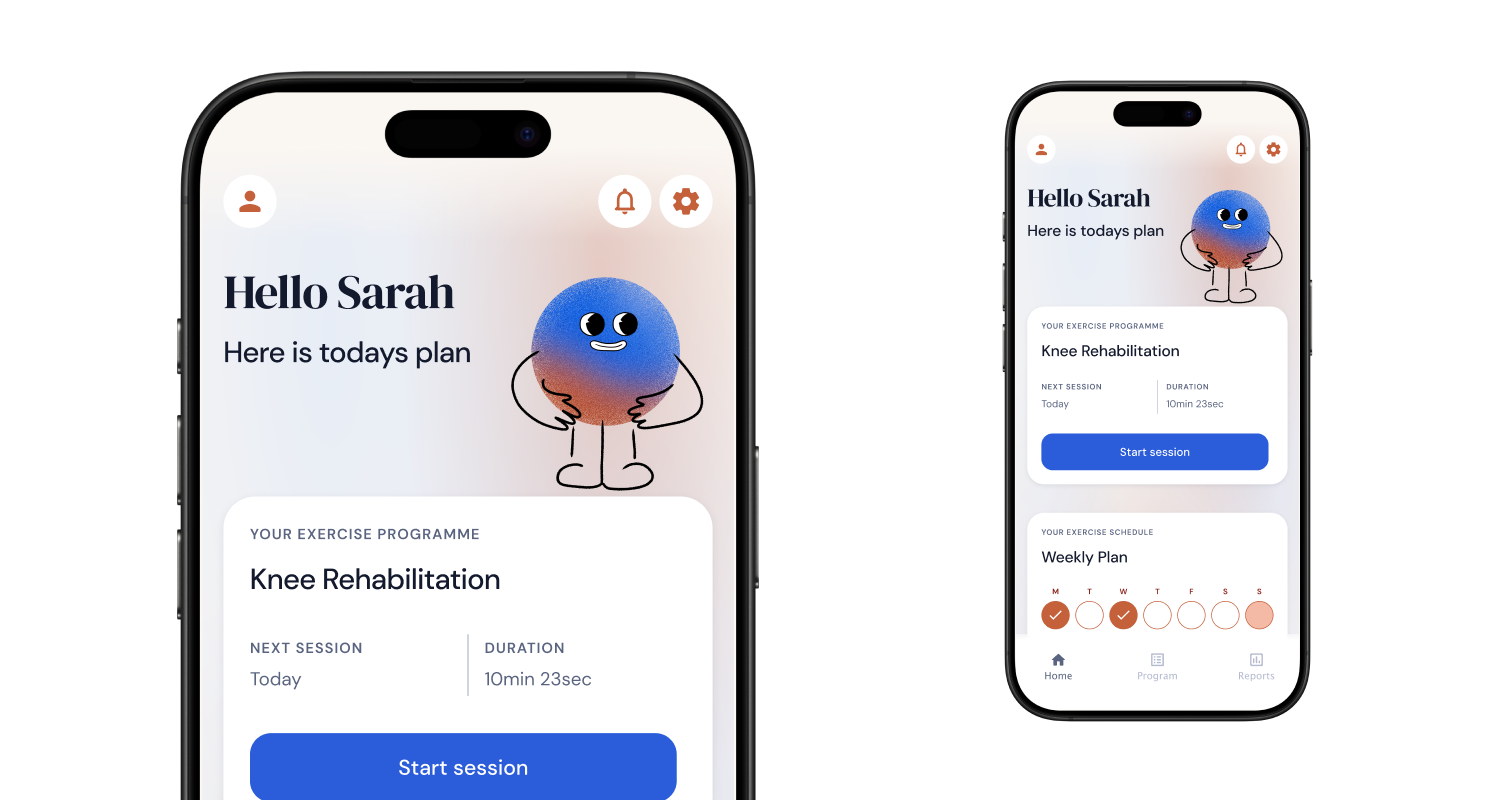
Movy: A two-sided agentic AI platform for physiotherapy rehabilitation
SUPSI MAIND × Spark Reply — Designing Intelligent Experiences, 2026
Movy is an AI-powered rehabilitation companion that fills the most neglected period in physiotherapy, the weeks between clinical appointments. Patients leave appointments with inadequate instructions and no support. Physiotherapists send patients home and receive no data until the next visit. Movy operates in that gap: generating personalised AI-assembled exercise programmes, adapting schedules to the patient's actual behaviour, conducting post-session check-ins through conversation, and synthesising the full cycle into a structured clinical picture delivered to the physiotherapist before every appointment. The system acts autonomously across the full between-session cycle.
Problem
Physiotherapy rehabilitation depends on what happens between appointments. Exercises prescribed in the clinic need to be performed at home, consistently, over weeks. But the clinical system provides no support during that period. The patient is left with a piece of paper and no mechanism to resolve uncertainty. The physiotherapist has no visibility into what is actually happening until the patient walks back in.
Approach
The research followed three strands.
- Foundational desk research covered secondary literature on adherence science, existing rehabilitation platforms and the structural conditions that make between-session support difficult.
- Primary research comprised 16 interviews, 10 with physiotherapy patients and 6 with physiotherapists. The interviews were conducted, transcribed, and fully coded for patterns.
- Secondary research included competitor benchmarking and market context.
- My specific contribution spanned the full research phase: desk research, interview conduct and facilitation, transcript synthesis, pain point mapping, archetype development, and user journey mapping.
Findings
Non-adherence is structural, not motivational
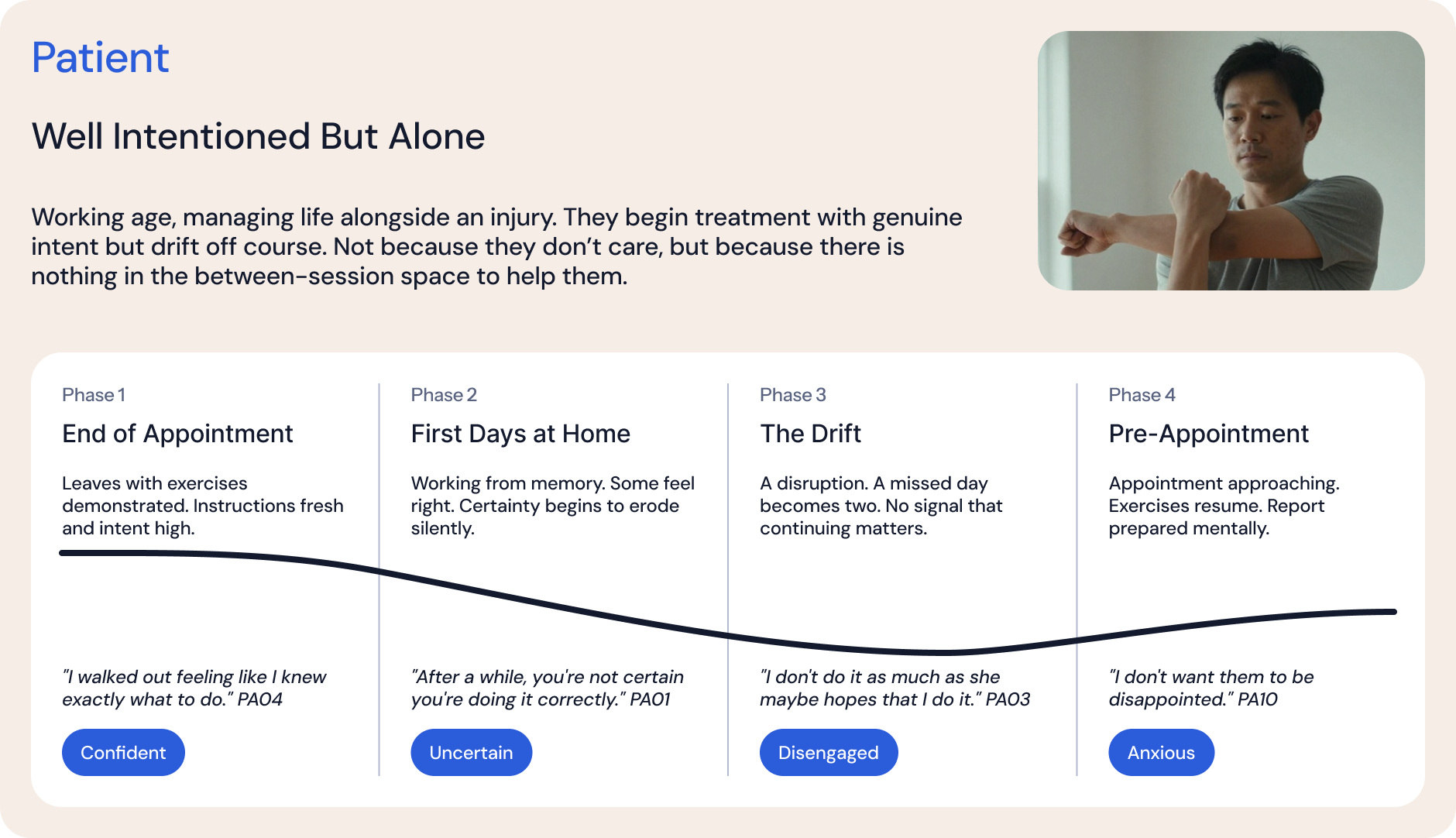
7 in 10 patients in our interviews said adherence drop-off is triggered by routine disruption, not disengagement. They wanted to do their exercises. There was nothing to hold them in the programme when life got in the way.
"It's hard to maintain the motivation... you just get too busy, something else comes up." PA01
Between sessions, patients are unsupported and unequipped
9 in 10 patients were uncertain whether they were performing their exercises correctly at home. None had a way to resolve that uncertainty between sessions.
"After you've been doing it for a while, you're not absolutely certain whether you're actually doing it correctly." PA05
The clinical picture is built on ineffective and incomplete data
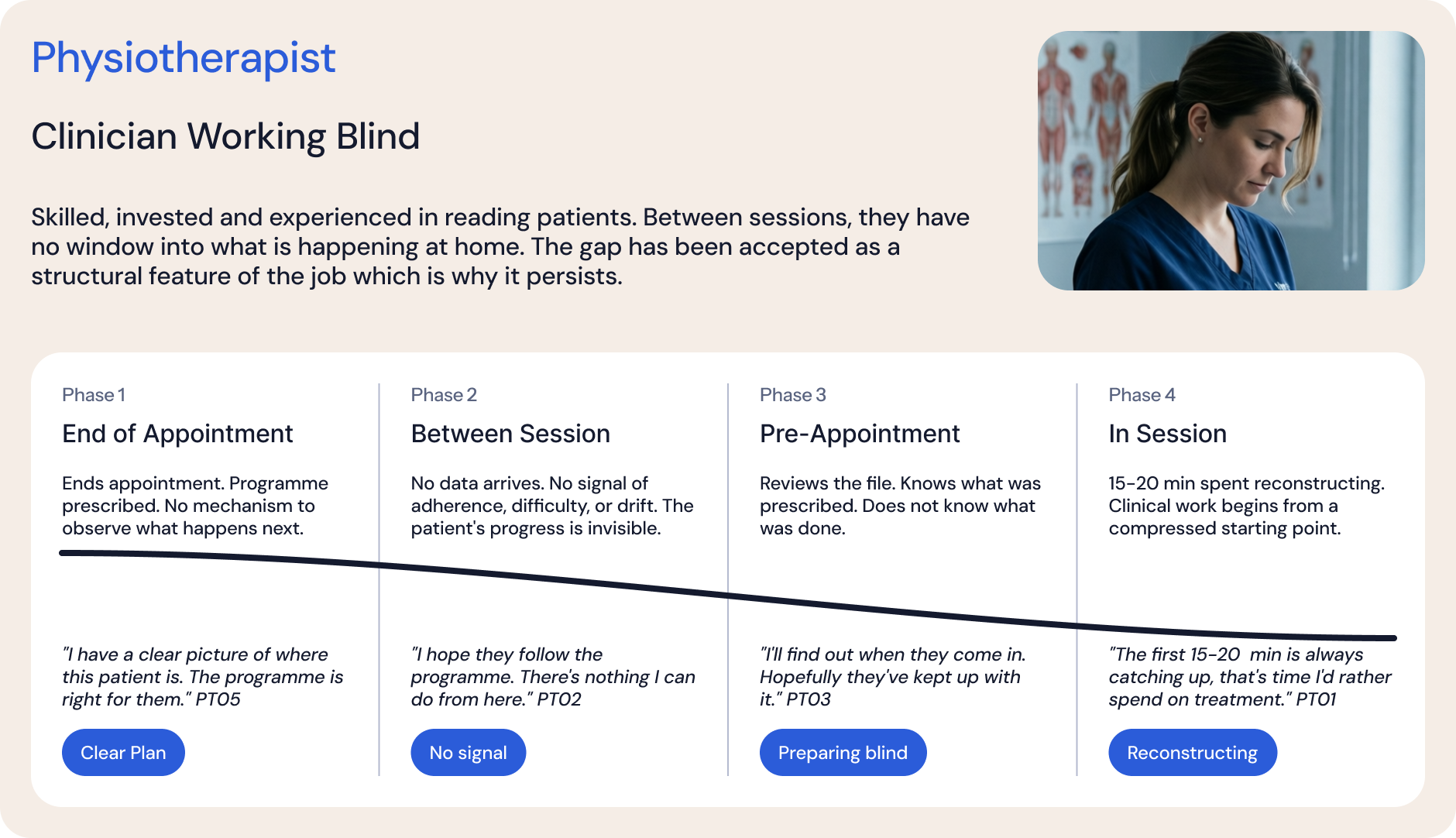
15–20 minutes of physiotherapy appointment is spent reconstructing what happened at home before any clinical work can begin. Both sides know the information being exchanged is incomplete and likely inaccurate as patients report to over report their adherence.
"The home programme is blind to date." PT05
"The first 15–20 min is always catching up, that's time I'd rather spend on treatment." PT01
Archetypes
Design Direction
Three design opportunities emerged from the research.
Opportunity 1: Give the PT a way to deliver a personalised programme without the time cost.
Physiotherapists currently assemble home exercise instructions manually, for example, paper, verbal instruction, improvised video.
The design opportunity was to give the PT a generation tool: their clinical parameters as input, a standardised personalised programme as output. The agent does the synthesis.
Opportunity 2: Give the patient a programme that adapts to their life and supports them during their exercise session.
A static programme ignores the reality of how people live. The design opportunity was to give the patient something present, a companion that knows their goal, adjusts to when they actually exercise, and shows up with the right message when the programme is at risk. An agent that is then present during their exercise session to deliver a rich reference material, like they are with their physiotherapist.
Opportunity 3: Build the shared record so neither side has to.
Patients under-report because there is nothing else to rely on and they rely on recall. Physiotherapists reconstruct because there is no alternative.
The design opportunity was to create a record that forms automatically across the cycle, from every session, every check-in, every missed day, so neither user has to compile or recall it under pressure.
Movy
The name combines movement, the physical act of rehabilitation, and movie, the high-quality video exercise reference at the heart of the programme. Movy is a two-sided agentic AI companion: one agent facing the patient, one facing the physiotherapist, operating together across the full between-session cycle. What makes it agentic is not that it responds to requests — it is that it acts, adapts, and delivers across weeks without either user initiating anything.
The patient is not alone. The physiotherapist is not blind. The reconstruction is eliminated.
Patient Agent
Between appointments, the patient is no longer alone. Movy delivers the personalised exercise programme, monitors the weekly quota and adapts the schedule to the patient's actual behaviour and ensures the physiotherapist already knows what happened before they ask. The agent uses medium warmth and plain language. It is not a medical advisor and it is not a substitute for the physiotherapist. Clinical decisions belong to the PT. The agent knows this and defers to it consistently.
Physiotherapist Agent
Movy gives physiotherapists a standardised way to deliver a personalised programme, records what the patient does with it across every session of the cycle, and synthesises it into a structured clinical picture delivered before the appointment begins. The agent uses expert vocabulary and is clinically precise and fast to read. It is not a decision-maker or a communication channel to the patient. Every output that reaches the patient requires PT sign-off. Clinical control stays with the physiotherapist at every step.
Interface Design
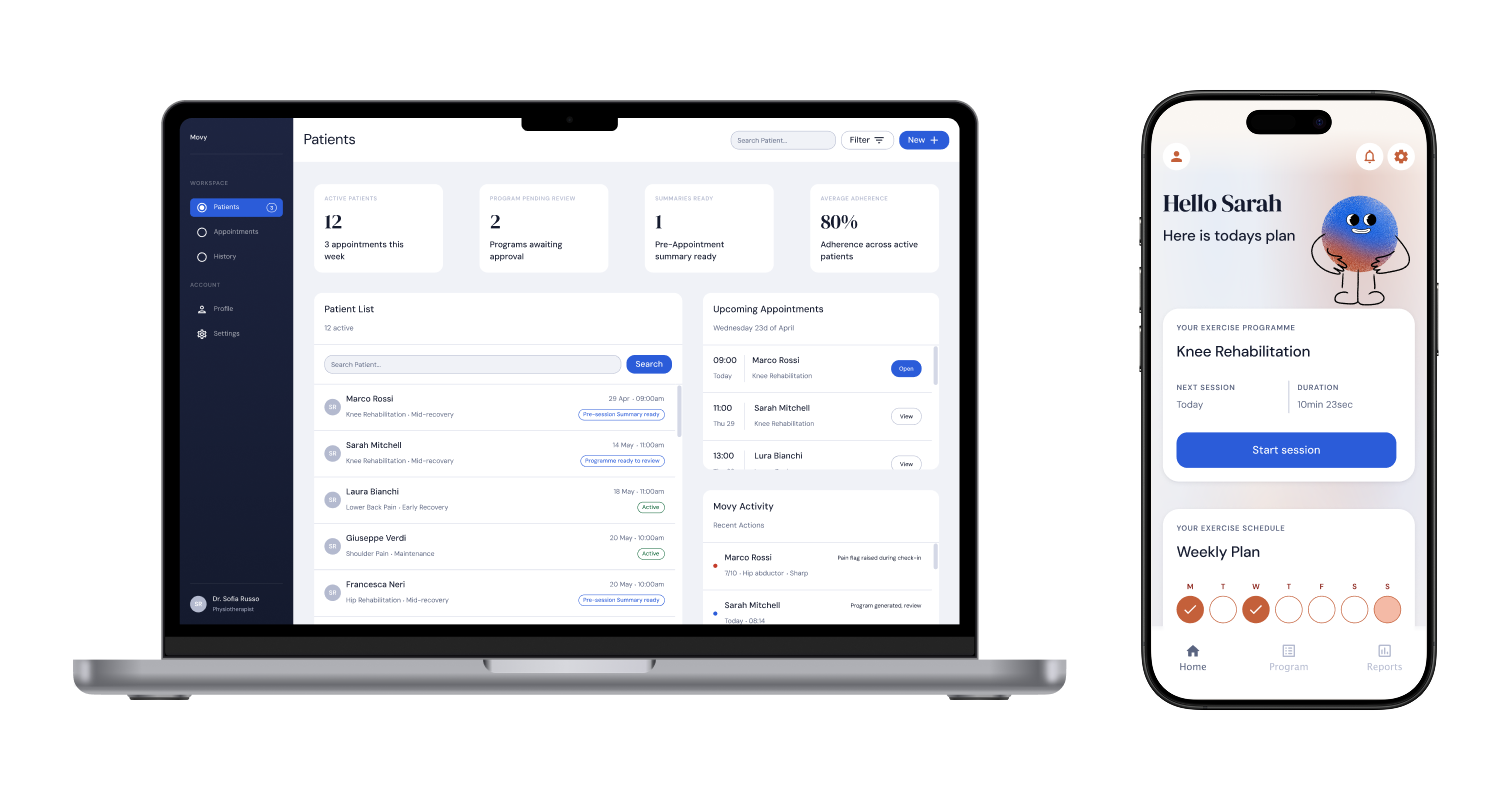
The two interfaces serve fundamentally different users with a different clinical relationship to the system. I did the full interface design process for both: user flows, wireframes, interactive prototypes, and high-fidelity mockups.
Patient Interface
Onboarding
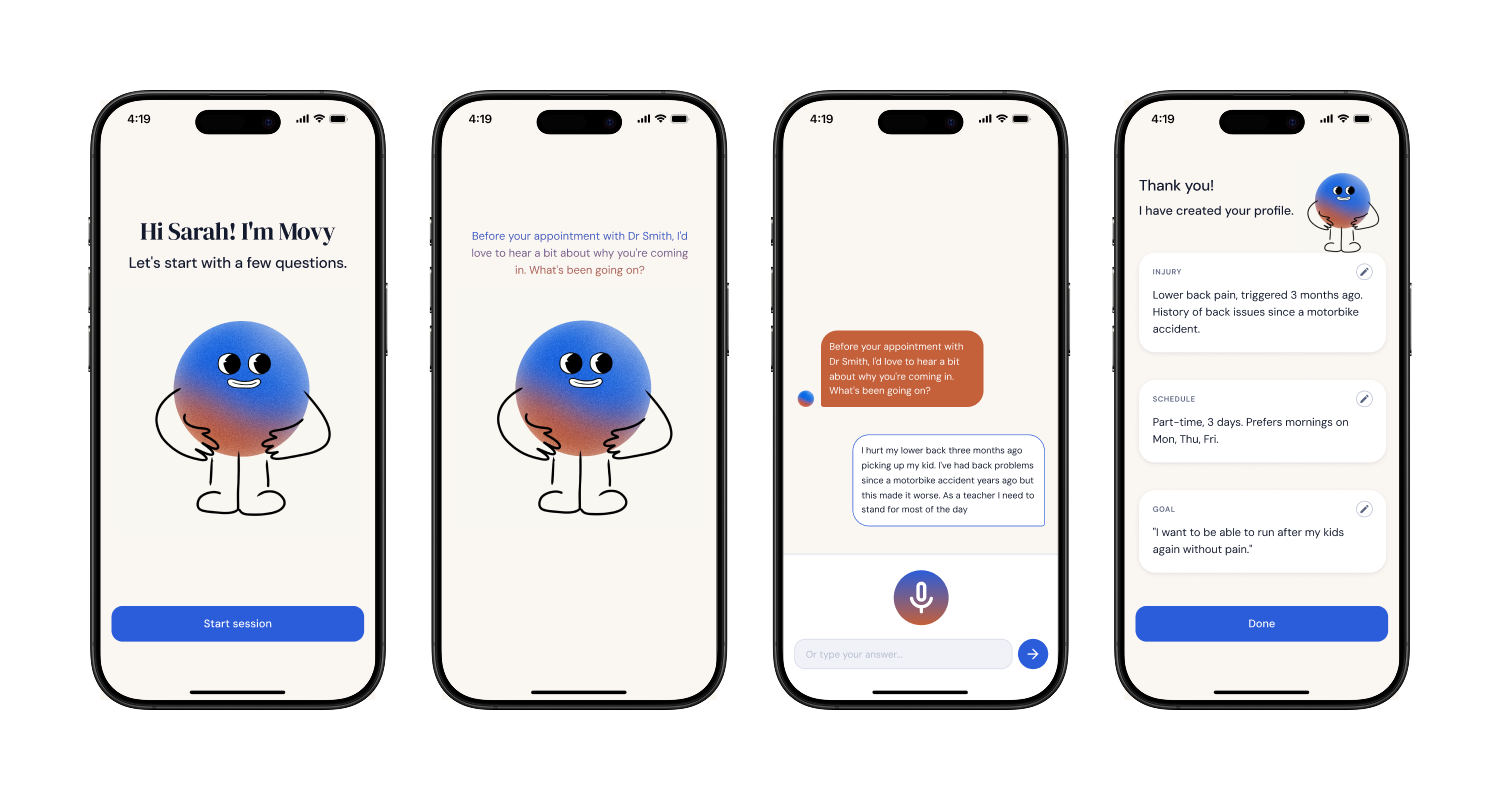
The patient experience begins before the first appointment. Movy opens with a single question and listens. Movy extracts data on the patient injury, schedule, lifestyle, and goal from the patient, asking followup questions when needed.
Program Delivered
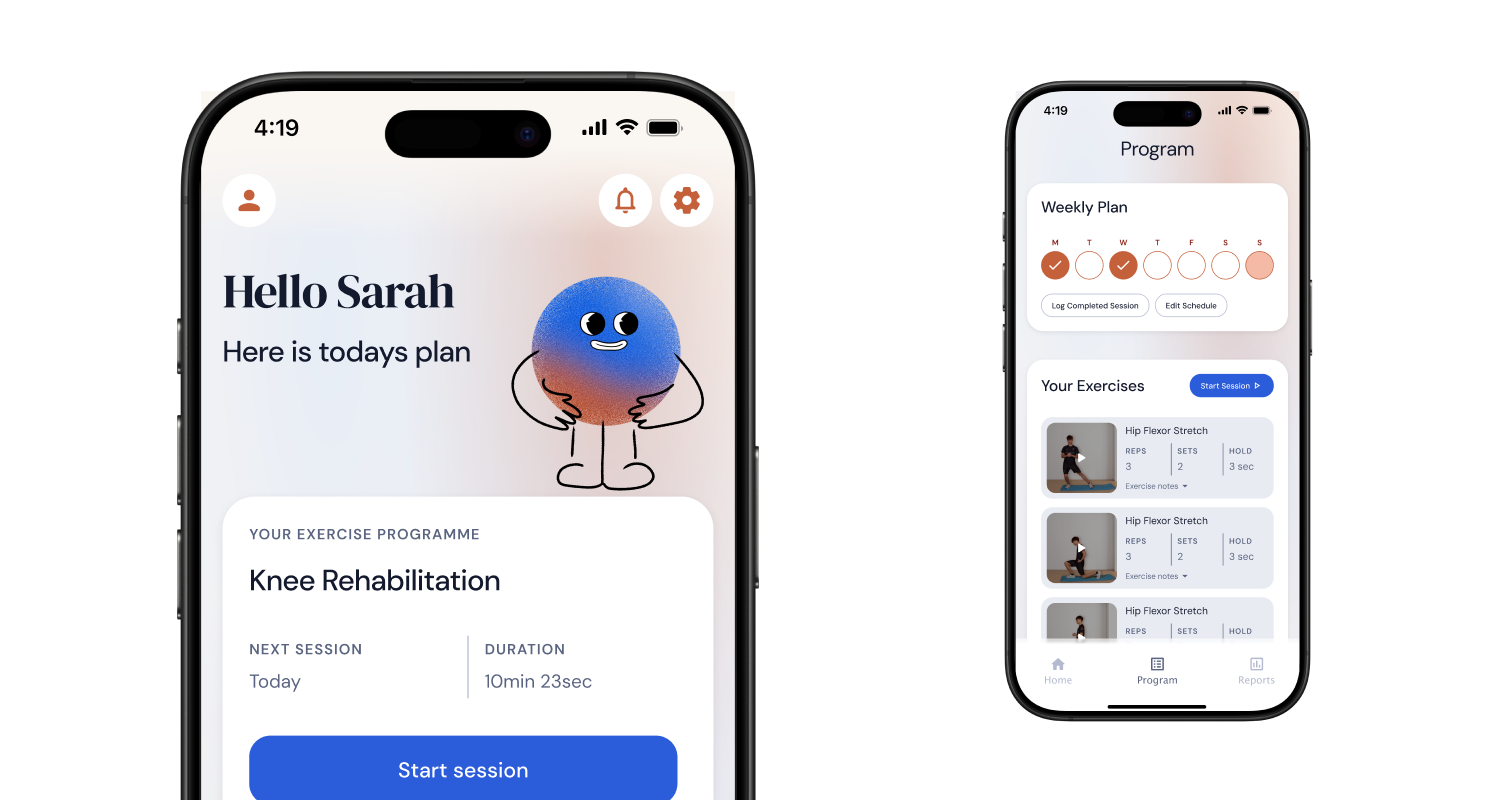
Upon completion of the onboarding, the patient appointment is confirmed. From there, the patient goes to their appointment where their physiotherapist enters the program configuration and Movy generates a personalised exercise schedule and video for the patient. The patient receives a home screen with their AI-assembled exercise programme and weekly schedule.
Exercise Session
The patient starts their session. The exercise video that Movy generates is a single continuous video assembled by stitching pre-recorded exercise clips from a library in the PT-prescribed order. Each exercise segment contains: the movement demonstration at the correct pace; verbal cues baked into the audio at the relevant moment. This video gives the patient a detailed reference to follow, giving them confidence and agency in the exercises they are doing, like they are there with their PT. Movy delivers all exercise instructions in voice. Movy is present throughout. At the midpoint, Movy asks how it's going. The patient responds by voice. Movy responds and gives feedback in line with the patient's clinical parameters.
Check-in
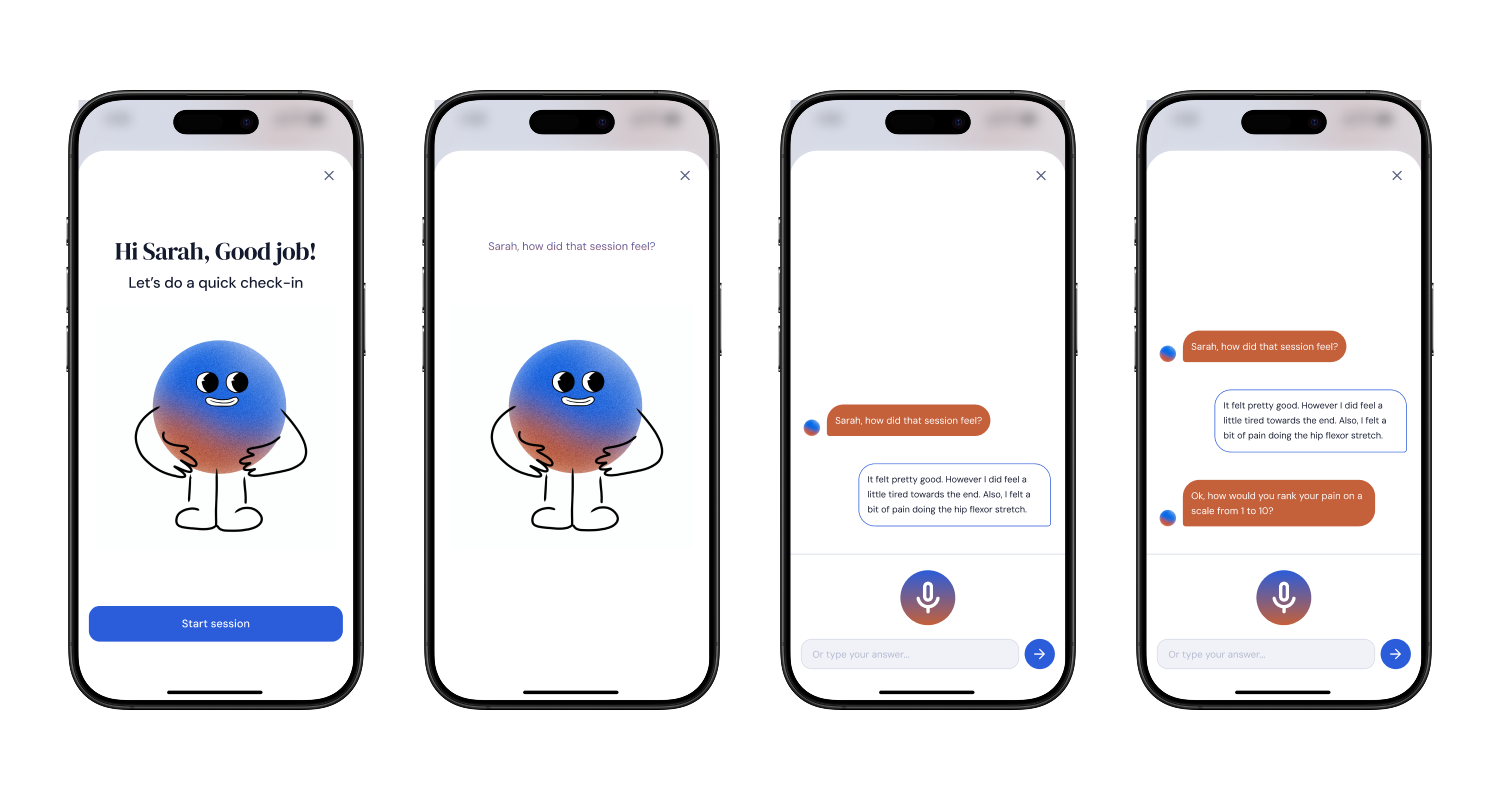
After the session, a brief conversational check-in extracts adherence, pain, confidence, and difficulty from natural language.
Pre-appointment Report
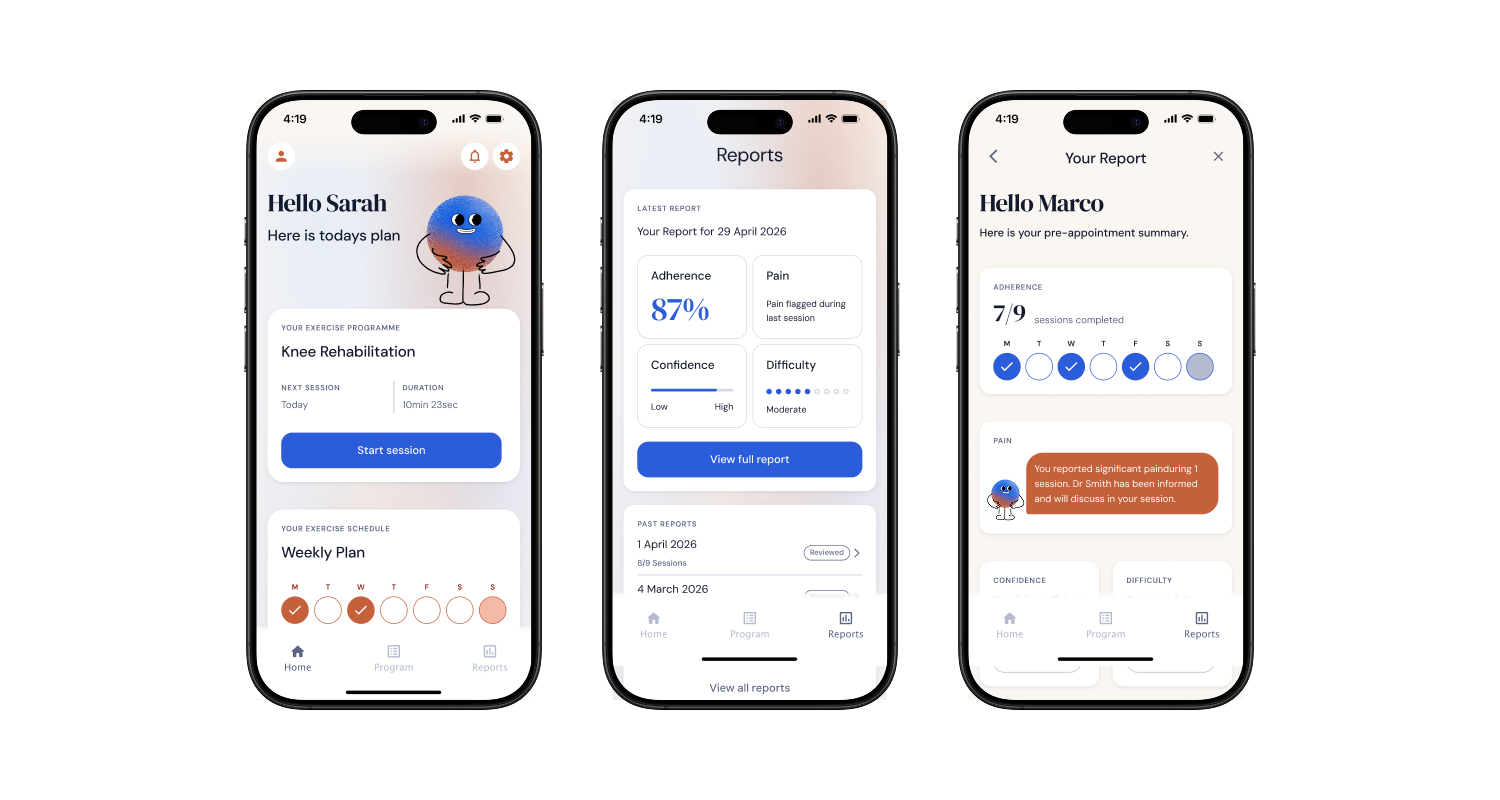
Before the appointment, the patient receives their own summary about their program data. They arrive knowing Dr Russo already has the full picture. The pressure to self-report accurately under time pressure is removed.
Physiotherapist Interface
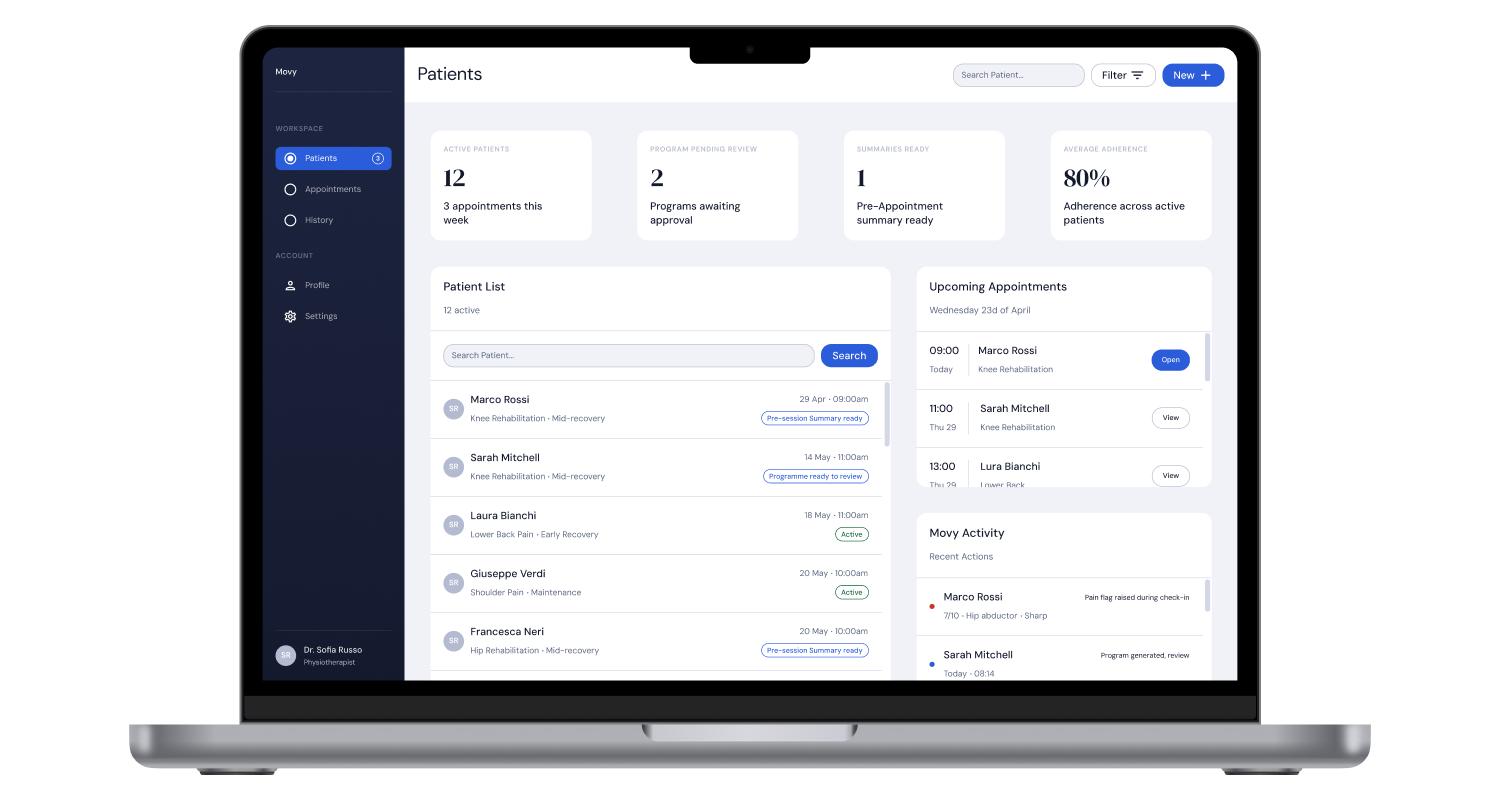
Patient Dashboard
The PT interface opens on a patient list where Movy surfaces what needs attention: flagged sessions, reports pending review, upcoming appointments.
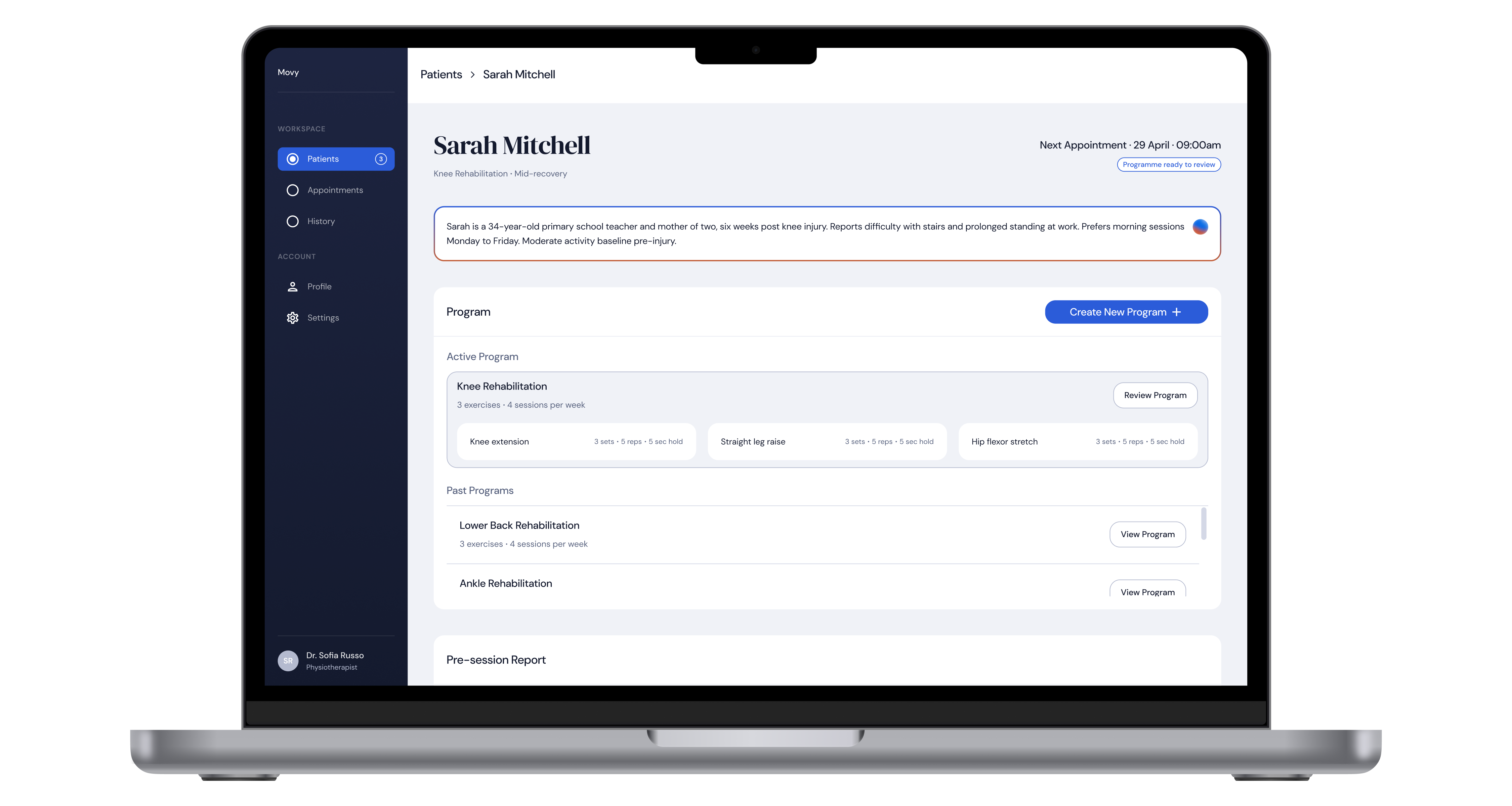
Patient Profile
On a patient's profile, the first thing visible is the patient snapshot: a short clinical paragraph generated from the onboarding conversation, readable in under 30 seconds. The PT walks in knowing who they are treating before the appointment.
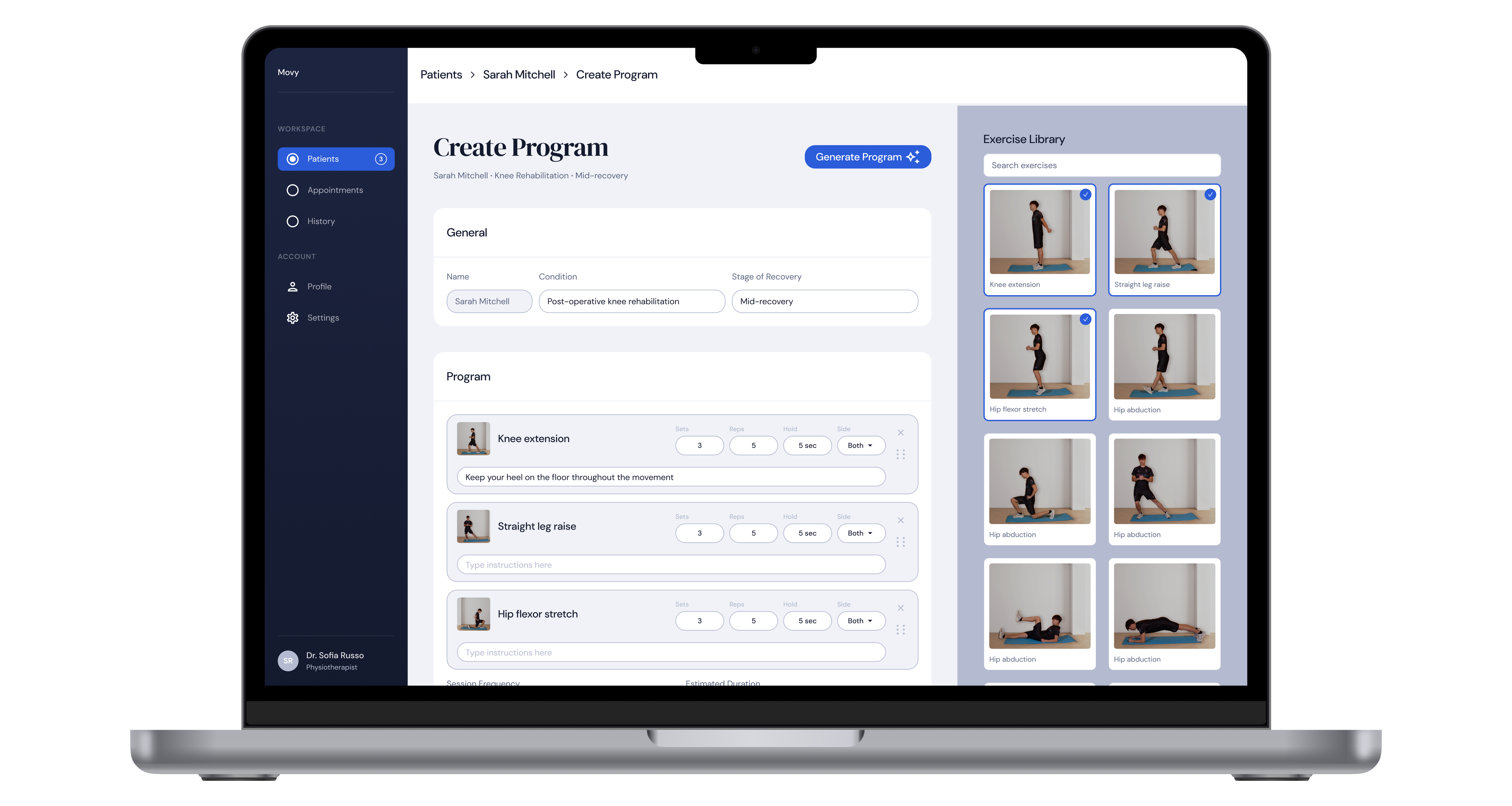
Programme Configuration
Programme configuration gives the PT an exercise library, parameter inputs, and a pain threshold field. On submission, Movy generates the reference video and the personalised schedule simultaneously. The PT reviews both before anything reaches the patient. The exercise reference video is a single continuous video assembled by stitching individual exercise clips from a library in the PT-prescribed order.
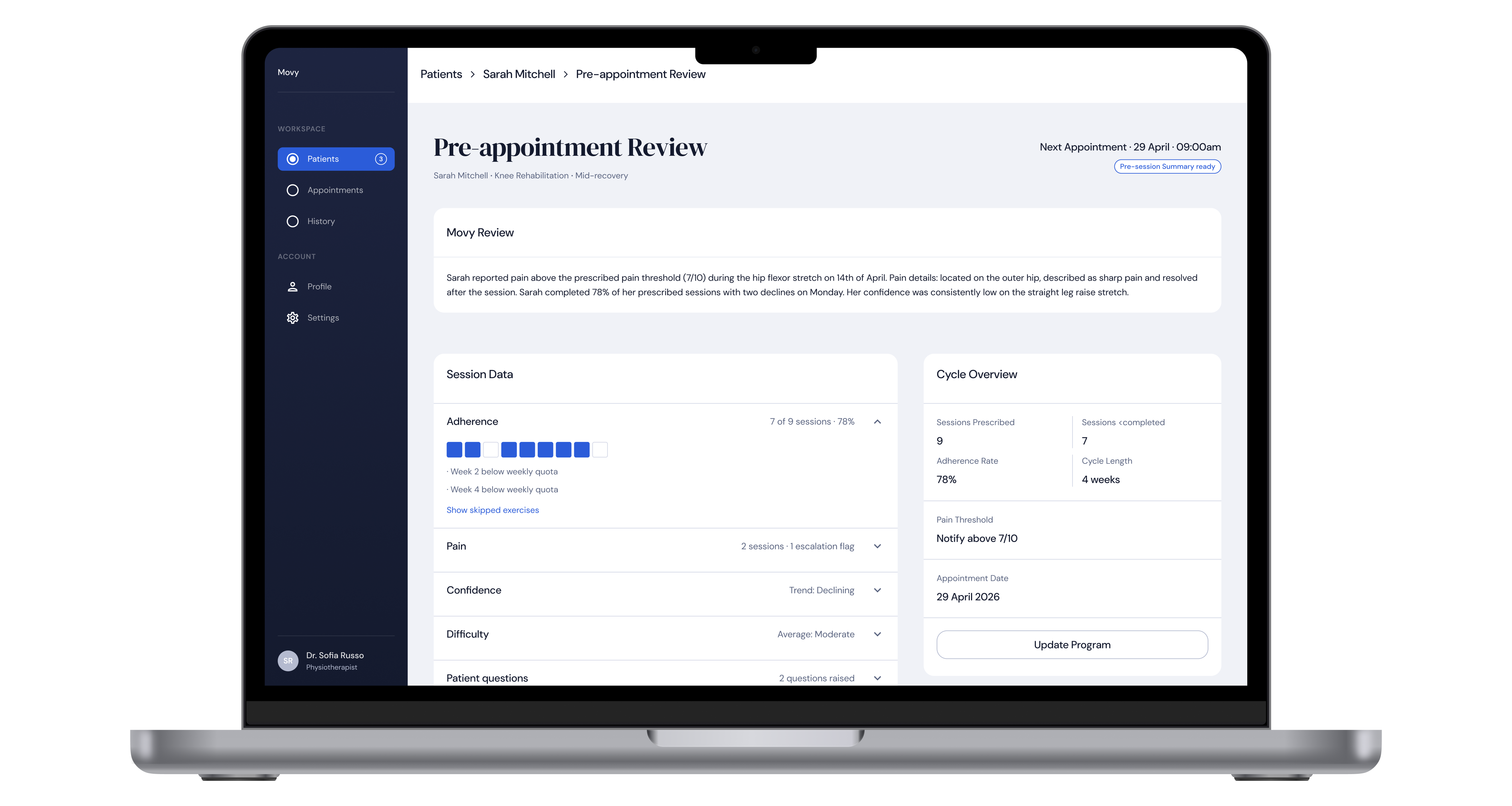
Pre-appointment Review
The pre-appointment review arrives automatically before every appointment. It is a structured clinical document with Movy's interpretation leading, pain flags surfacing first, and six expandable sections covering adherence, pain, confidence, difficulty, patient questions, and cycle overview.
Agent Blueprint
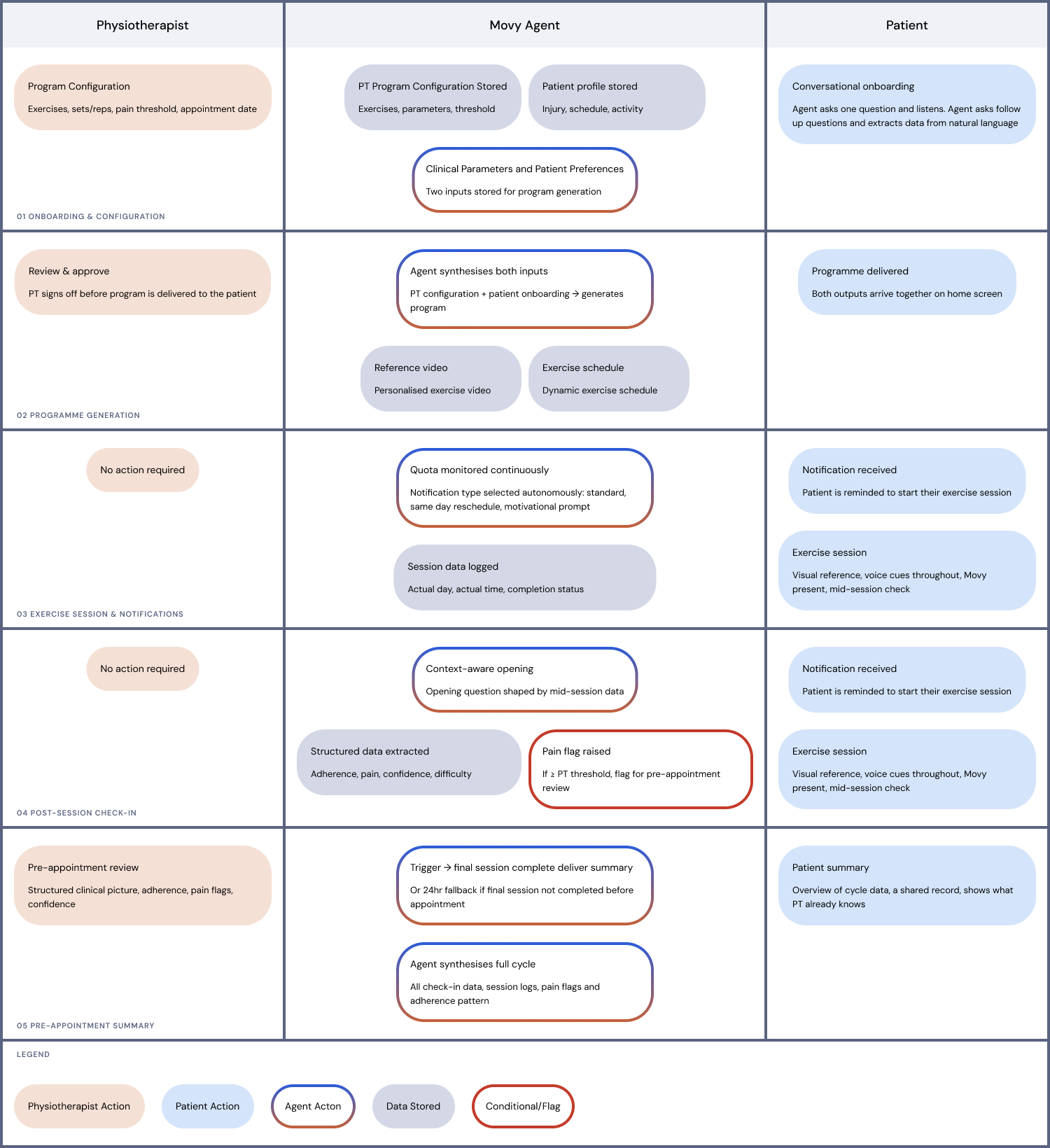
The agentic blueprint is a workflow map of the full between-session system. The blueprint highlights where autonomous decisions are made, what data persists across the cycle, and what the guardrails are. It was one of my primary owned deliverables and sits at the intersection of service design and system specification.
The blueprint maps five features across the cycle, including: conversational onboarding, AI-generated exercise programme, post-session check-in, notification system, and pre-appointment summary. These features are mapped against a persistent knowledge base that holds patient data, PT configuration, session history, and pain thresholds. Several specific design decisions are encoded in the blueprint that would be invisible in the interface screens alone.
Agentic Prompt & Test Environment
Two detailed system prompts were written, one for the patient onboarding conversation and one for the post-session check-in. Each prompt encodes the conversation flow, extraction rules, branching logic, escalation conditions, output format, and guardrails. Acceptance criteria were defined for both with specific pass/fail checks for each behaviour. The prompts were tested against these benchmarks and refined iteratively. I built a test environment to run both conversations via a chat interface, calling the Anthropic API with the system prompt loaded.
The live agent is accessible by request. Get in touch at annabelle.conron@outlook.com to receive an API key.
Scrollytelling
The scrollytelling is the project's narrative one-pager, a web-based long-scroll experience that walks from the research findings through to the live agent demo. It was designed and built from scratch as one of my primary owned deliverables.
Reflection
What this project taught
Designing for agentic AI is a different discipline from interface design. The screens are downstream of the system. The agentic blueprint was the design artefact that made this visible: it forced explicit decisions about when the system acts autonomously, what data it holds, what it surfaces and what it keeps invisible. That work sits closer to service design and system architecture than to traditional UX, and it is the part of this project I found most intellectually demanding and most distinct from anything I had designed before.
Challenge
The test environment demonstrates the conversational behaviour of the system but not its full agentic operation. In a production version, Movy would need persistent memory across sessions, a database that holds the patient profile, session history, and goal anchor between conversations. Additionally, the schedule adaptation and notification logic would run as background processes rather than being simulated. The current implementation is a designed proof of the conversation model, not a live deployment of the autonomous system. That gap between what is demonstrated and what would need to be built in production is something I would document more explicitly if the project continued.